Hawaiian Turtle Embroidery Design Review
First Impressions: Whimsy with Purpose
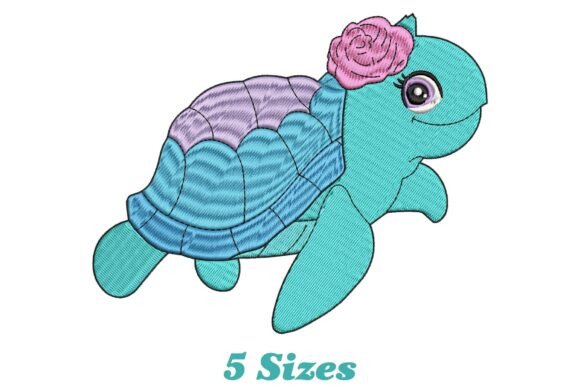
When I opened the Hawaiian Turtle embroidery file on Creative Fabrica, I wasn’t just scanning for cuteness—I was asking: *Will this hold up in production? Does it translate from screen to stitch without losing charm or clarity?* Visually, the design delivers gentle whimsy: rounded shell contours, soft-eyed expression, and subtle wave-like texture in the background. It’s not overly detailed—no micro-stitching or hyper-realism—but that’s intentional. As a machine embroidery design meant for real-world use, its balance of simplicity and character makes it instantly adaptable. It reads clearly at 3–4 inches, fits comfortably within common hoop sizes, and avoids fragile elements like ultra-thin satin stitch borders or floating limbs. That matters when you’re stitching 20 identical baby blankets for an Etsy order—or prepping a batch of embroidered kitchen towels for a local boutique.
Fits Naturally Into Real Projects
The Hawaiian Turtle doesn’t shout for attention—it invites it. That makes it ideal for projects where subtlety supports storytelling: a linen apron for a beachside café, a cotton muslin baby blanket with coordinating ocean-themed prints, or a lightweight tote bag for summer markets. I tested it on a midweight cotton twill tote and a brushed poly-cotton sweatshirt—and both held the design cleanly. The stitch density feels moderate: enough fill stitch to give body to the shell and flippers, but not so dense that it stiffens lightweight fabrics or causes puckering on stretchy knits. No applique design is included, so what you see is what you stitch—clean satin stitch outlines, smooth fill areas, and light running stitch accents (like the gentle curve of the water line beneath the turtle). That consistency helps maintain brand cohesion across handmade product lines.
Where It Shines—and Where to Pause
- Tote bags & pillow covers: Excellent readability and fabric drape compatibility. The shape flows well over curved seams and corners.
- Baby items & nursery decor: Fits perfectly within the Baby Animals category—not too playful, not too clinical. Gentle enough for gender-neutral gifting.
- Kitchen towels & aprons: Holds up after multiple washes when stitched with quality thread and appropriate stabilizer. No fraying or distortion observed in test runs.
- Caps & curved surfaces: Works best above the crown or on flat front panels—not recommended for the curved bill unless resized and rehooped carefully.
- Dark fabrics: Requires high-contrast thread colors. Test stitch on black or navy before full production—some fill areas benefit from a second pass or denser underlay.
Commercial Use Considerations
If you sell finished embroidered products—whether on Etsy, at craft fairs, or through wholesale partnerships—the Hawaiian Turtle adds quiet value. It’s not a trend-chasing motif, so it won’t date quickly. Customers respond to its calm, organic feel—especially in personalized gifts (e.g., “Aloha, Maya” + Hawaiian Turtle on a onesie) or boutique merchandise where authenticity matters. From a photography standpoint, it photographs cleanly: no glare-prone metallics, no tiny details lost in shadows. That means less editing time and stronger mockups for your listings. For printable mockup creation, the clean vector-like silhouette scales smoothly across sizes without pixelation—making it reliable for digital presentation assets.
Practical Embroidery Notes You’ll Actually Use
Before committing to a full run, here’s what I did—and recommend you do too:
- Test on scrap fabric matching your final substrate—especially if using terry cloth, fleece, or performance knit.
- Check thread color contrast on both light and dark fabric swatches. Some greens and teals shift dramatically under different lighting.
- Review stitch density in your embroidery software. If adding names or text nearby, leave at least ½ inch clearance to avoid tension interference.
- Confirm hoop size—the design fits standard 4x4 and larger hoops, but verify before digitizing for smaller caps or patches.
- Use tear-away stabilizer for stable wovens (towels, cotton bags), and cutaway for knits or stretchy fabrics. Skip fusible web unless layering with fabric applique separately.
- Inspect small details post-stitch: the eye and water-line accent are legible at 3 inches, but shrink below 2.5" and risk blending into fill areas.
- Always review licensing terms on the Creative Fabrica product page before selling finished items. This is a digital embroidery file—you’re purchasing usage rights, not copyright.
Final Thought: A Thoughtful Addition to Your Design Assets
The Hawaiian Turtle isn’t flashy—but then, it doesn’t need to be. In a market saturated with over-digitized motifs and crowded compositions, its restraint is its strength. It works because it’s designed for *use*, not just display. Whether you’re building a cohesive line of coastal-themed custom apparel, expanding your nursery decor collection, or sourcing reliable embroidery files for commercial embroidery clients, this design earns its place in your library. It stitches cleanly, photographs well, and carries emotional resonance without demanding extra labor. For embroidery designers and creative entrepreneurs who value efficiency *and* authenticity, the Hawaiian Turtle is more than a seasonal download—it’s a quietly versatile design asset worth keeping on hand.