One Line Face: A Whimsical Embroidery Design Worth Your Time?
First Impressions: Charm in Simplicity
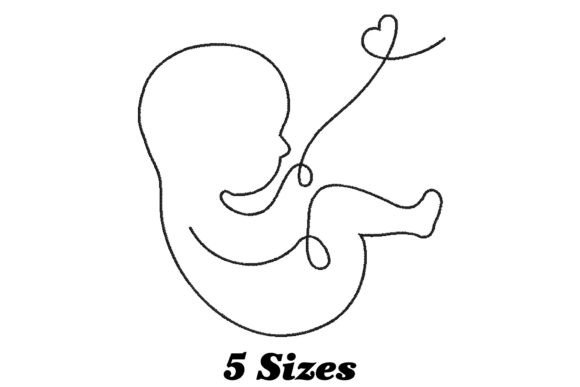
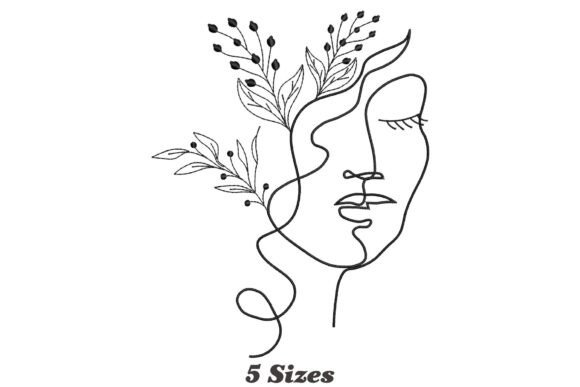
As an embroidery designer who’s stitched hundreds of faces—from hyper-realistic portraits to stylized icons—One Line Face caught my eye not for its complexity, but for its confident minimalism. It’s a single continuous line that loops, curves, and resolves into a friendly, expressive face. There’s no shading, no layered features—just rhythm, balance, and quiet personality. Visually, it leans into the Beauty category without relying on florals or symmetry; instead, it uses gesture and flow to evoke warmth and approachability. That makes it feel less like decoration and more like a signature—a tiny visual voice you can carry across products.
Where It Naturally Lives: Real Projects, Not Just Mockups
I pulled One Line Face into my workflow before finalizing a batch of custom aprons for a local café owner. It also sat in my queue for baby blanket personalization, kitchen towel sets for a boutique launch, and even embroidered patches meant for denim jackets sold at craft fairs. Why? Because its scale and structure suit small-to-medium hoop sizes—no sprawling 6” x 10” footprint required. It reads clearly at 2.5”–3.5”, making it ideal for sweatshirt chest placements, cap fronts, tote bag corners, and pillow covers where subtlety matters.
Performance Across Fabrics & Use Cases
One Line Face is a machine embroidery design built for versatility—but not magic. On stable fabrics like cotton twill (aprons), terry cloth (kitchen towels), or midweight jersey (sweatshirts), it stitches cleanly with standard tear-away stabilizer. The line weight feels intentional—not too thin to vanish, not so thick it overwhelms delicate surfaces. I tested it on a curved cap front using light cutaway stabilizer and basting stitches; the result held shape without puckering.
On stretchy knits or textured weaves (like linen blends), I recommend a light fusible topping—especially if the design sits near seams or high-movement areas. Dark fabric? No problem—just confirm your thread colors offer enough contrast. I used soft heather grey thread on charcoal cotton and got clean definition without over-stitching. For baby items or frequently washed handmade products, I checked stitch density first: One Line Face avoids dense fill areas, relying mostly on smooth satin and running stitch paths—ideal for durability and gentle laundering.
What It Adds to Your Handmade Product
- Value & Trust: Its clean execution signals craftsmanship—not just digitizing skill, but thoughtful design intent. Buyers notice that difference, especially on Etsy listings where presentation impacts perceived quality.
- Brand Consistency: Because it’s expressive yet neutral, One Line Face works across niches—nursery decor, wellness apparel, artisan food branding—without clashing with your existing palette or voice.
- Giftability & Photography: It photographs beautifully. The simplicity means no distracting shadows or texture interference in flat-lay shots—perfect for printable mockups and social media previews.
- Customer Engagement: Customers love asking, “Is that hand-drawn?” Even though it’s a digital embroidery file, its organic line quality invites connection. That’s gold for personalized gifts and boutique merchandise.
Practical Notes Before You Stitch
This isn’t a “load-and-go” design—and that’s a good thing. As a working designer, I treat every Creative Fabrica embroidery download as a potential production asset, not just a one-off. Here’s how I vet One Line Face before committing:
- Test on scrap fabric—same type, same stabilizer, same thread brand you’ll use commercially.
- Review stitch density in your editing software. Look for any unintended overlaps or micro-loops that could snag on textured surfaces.
- Confirm hoop size compatibility. Does it fit comfortably within your most-used hoops? If you embroider caps daily, check whether the design clears the frame edge.
- Compare light/dark fabric mockups. Some lines gain or lose character depending on contrast—I adjusted thread hue slightly between ivory linen and navy canvas.
- Inspect small details post-stitch. Tiny eyes or mouth curves can blur if tension is off or stabilizer shifts. A quick press with low heat helps settle the line without flattening dimension.
- Verify licensing. Since this is a commercial embroidery asset, I always re-check the Creative Fabrica product page for permitted uses—especially if bundling One Line Face into kits or digital design assets for resale.
Final Thoughts: When Simplicity Serves Strategy
One Line Face won’t replace your go-to floral monogram or intricate applique design—but it fills a quiet, strategic gap. It’s the kind of embroidery file that elevates a plain tote bag into a curated statement, turns a baby blanket into a keepsake, or gives a small-batch apparel line instant cohesion. It doesn’t shout. It listens—and invites customers to do the same.
If you’re building a collection of reliable, mood-driven Embroidery assets—especially for custom apparel, nursery decor, or handmade gifts—you’ll find One Line Face earns repeat use. Not because it’s flashy, but because it’s honest, adaptable, and quietly memorable. In a market flooded with ornate motifs, sometimes the strongest impression is made with one line—and the space it leaves behind.